Making Tax Digital (MTD) is changing how UK businesses manage and submit their tax information. Businesses affected by MTD need to keep digital records and use compatible software to meet their HMRC obligations. Preparing early can help businesses improve tax compliance, simplify VAT and tax reporting, and avoid last-minute issues.
Before switching, UK businesses should review their accounting systems, check their MTD requirements, organise digital records and consider professional tax preparation, tax advisory or tax compliance services where needed.
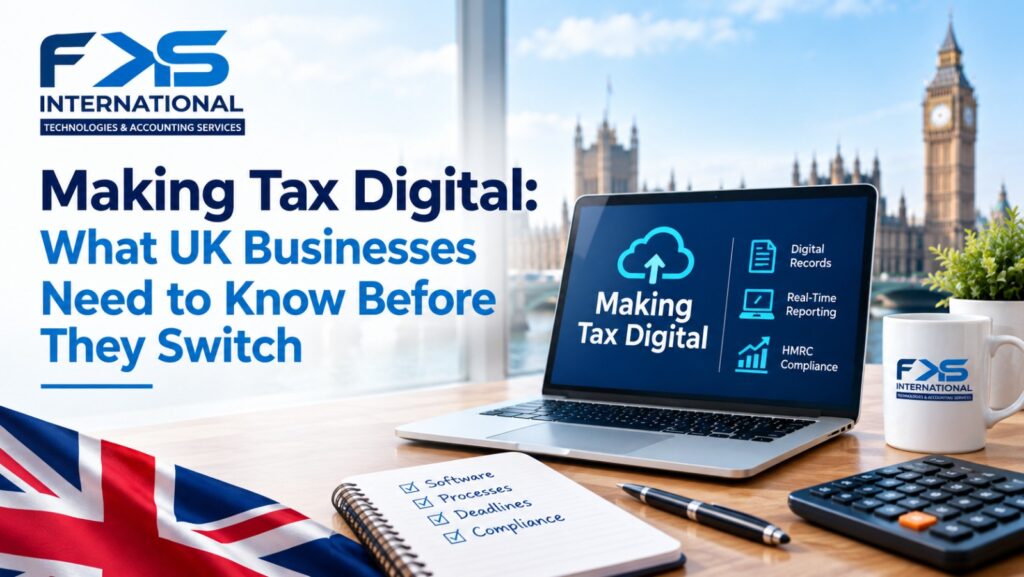
Making Tax Digital (MTD) is changing the way businesses across the UK manage their tax records and interact with HMRC. The move towards digital tax administration means businesses need to pay closer attention to how financial information is recorded, stored and submitted.
For businesses still relying heavily on spreadsheets, manual bookkeeping or disconnected financial systems, preparing for MTD may require some changes.
The good news is that preparing early can make the transition much easier.
What Is Making Tax Digital?
Making Tax Digital is an HMRC initiative designed to make the UK tax system more efficient through digital record-keeping and online tax reporting.
Under the relevant MTD rules, businesses may need to keep their tax records digitally and use compatible software to submit information to HMRC.
MTD is being introduced in stages, with requirements depending on the type of tax and the taxpayer’s circumstances.
For businesses, this means tax compliance is becoming increasingly connected to the systems they use for bookkeeping, accounting and financial reporting.
Why Does Making Tax Digital Matter for UK Businesses?
MTD is more than simply replacing paper records with accounting software.
Businesses may need to review how they:
- Record sales and expenses
- Manage VAT
- Reconcile bank transactions
- Store financial information
- Prepare tax returns
- Share information with accountants
- Monitor tax liabilities
- Maintain accurate digital records
For smaller businesses without an internal finance team, these changes can create additional administrative pressure.
This is where professional business tax services UK businesses can use may help. The right support can make it easier to understand tax obligations and keep financial processes organised.
Who Needs to Follow Making Tax Digital?
MTD has been introduced gradually rather than requiring every taxpayer to switch at the same time.
MTD for VAT already applies to VAT-registered businesses within the relevant requirements. Further MTD changes are also being introduced for Income Tax, affecting qualifying self-employed individuals and landlords.
The rules and implementation dates can change, so businesses should check the latest HMRC requirements rather than relying on outdated information.
Companies should also remember that MTD is only one part of their wider tax responsibilities. VAT, Corporation Tax and other HMRC obligations still need to be managed appropriately.
If you are unsure about your requirements, tax advisory services UK businesses can use can help clarify what applies to your circumstances.
What Does MTD Mean for VAT-Registered Businesses?
VAT is one of the areas where businesses have already experienced the practical impact of Making Tax Digital.
Businesses within MTD for VAT generally need to maintain relevant digital records and submit VAT returns using compatible software.
This makes accurate bookkeeping particularly important.
For example, if sales, purchases or VAT transactions are incorrectly recorded, the problem can carry through to the VAT return.
Businesses may therefore benefit from reviewing their bookkeeping process before relying completely on their digital system.
For companies that need additional support, VAT return filing services UK can help with the preparation and submission process.
How Will MTD Affect Small Businesses?
For small businesses, switching to digital tax processes can initially seem like an additional administrative task.
However, a well-organised digital accounting system can also provide useful benefits.
Businesses may find it easier to:
- Track income and expenditure
- Reconcile bank transactions
- Monitor VAT
- Prepare financial reports
- Identify outstanding payments
- Review cash flow
- Estimate upcoming tax liabilities
- Share financial information with advisers
This can make financial management more proactive rather than simply focusing on tax deadlines.
Businesses that do not have dedicated finance staff may also consider tax preparation services for small businesses UK to support their ongoing tax administration.
Choosing the Right Software for MTD
Choosing suitable accounting software is one of the most important steps when preparing for MTD.
The right software will depend on your business structure, size, accounting requirements and relevant HMRC obligations.
Before choosing a system, consider whether it can:
- Keep appropriate digital records
- Support relevant HMRC submissions
- Handle VAT reporting
- Connect with bank accounts
- Integrate with existing accounting systems
- Produce useful financial reports
- Allow your accountant or tax adviser to access relevant information
It is also important to consider how existing financial records will be transferred into the new system.
Simply choosing popular accounting software does not guarantee a smooth transition. The system needs to work with the way your business actually operates.
Review Your Financial Records Before Switching
Moving from spreadsheets or manual processes to digital accounting is a good opportunity to clean up your financial records.
Before switching, businesses should review:
- Bank reconciliations
- Outstanding invoices
- Supplier balances
- Customer balances
- VAT records
- Expense categories
- Payroll information
- Previous tax submissions
- Duplicate or missing transactions
Poor-quality data can create problems even when the accounting software itself is working correctly.
Accurate information is therefore essential for effective tax compliance services for businesses UK companies may rely on.
Making Tax Digital and Tax Compliance
Digital records can make tax administration more organised, but businesses still need to understand their wider compliance responsibilities.
Depending on the business, these may include:
- VAT returns
- Corporation Tax
- Payroll-related obligations
- Business expenses
- Tax reporting
- HMRC correspondence
- Record retention
MTD should therefore be viewed as part of a broader tax compliance process.
Businesses that need ongoing support can consider tax compliance services UK to help maintain accurate records and meet relevant filing obligations.
Can MTD Improve Tax Planning?
One of the potential benefits of better digital records is improved visibility over the business’s financial position.
When financial information is accurate and available more regularly, business owners can make better-informed decisions about:
- Upcoming tax liabilities
- Cash flow
- Business expenditure
- VAT obligations
- Profitability
- Investment decisions
- Future business growth
This can support more effective business tax planning services UK.
Instead of considering tax only when a deadline approaches, businesses can take a more proactive approach throughout the year.
What About Corporation Tax?
Businesses should not assume that MTD requirements for VAT or Income Tax automatically apply in exactly the same way to Corporation Tax.
Companies still need to meet their existing Corporation Tax responsibilities and maintain appropriate financial records.
Businesses can use corporation tax services UK to support Corporation Tax preparation, filing and compliance.
For companies with more complex tax requirements, corporate tax advisory services UK can also provide support with tax planning and business decisions.
Should Your Business Outsource Tax Services?
Not every business has the resources or expertise to manage all tax processes internally.
A small business may not have a dedicated finance team, while a growing company may find that its existing staff are spending too much time on bookkeeping and tax administration.
Depending on the business’s needs, outsourced tax services UK can support areas such as:
- Tax preparation
- Tax compliance
- VAT reporting
- Corporation Tax
- Tax planning
- Financial record reviews
- HMRC-related requirements
Outsourcing can give business owners and internal teams more time to focus on operations and growth while specialist advisers support their tax processes.
MTD Considerations for Startups
Startups have an advantage when it comes to digital accounting: they can build the right systems from the beginning.
Rather than starting with spreadsheets and later migrating years of financial data, new businesses can establish structured digital bookkeeping and accounting processes early.
Startups should consider:
- Choosing suitable accounting software
- Keeping digital records from day one
- Understanding VAT requirements
- Tracking business expenses correctly
- Planning for future tax liabilities
- Reviewing their business structure
Professional startup tax advisory services UK can also help new businesses understand their tax responsibilities and plan ahead as they grow.
Common Making Tax Digital Mistakes to Avoid
Businesses preparing for MTD should avoid treating the transition as simply a software change.
1. Waiting Until the Last Minute
Leaving preparations until a deadline is approaching can create unnecessary pressure and increase the risk of errors.
2. Choosing the Wrong Software
The cheapest or most popular software may not necessarily be the best fit for your business.
3. Importing Poor-Quality Data
Moving inaccurate or incomplete records into a digital system does not solve the underlying problem.
4. Ignoring Wider Tax Obligations
MTD does not replace other tax responsibilities. Businesses still need to manage VAT, Corporation Tax and other relevant obligations.
5. Failing to Review the Process
Businesses should regularly check whether their accounting and tax processes are producing accurate information.
How Can UK Businesses Prepare for Making Tax Digital?
A practical approach can make the transition easier.
Step 1: Review Your Current Accounting Process
Identify how your business currently records sales, purchases, expenses, VAT and other financial information.
Step 2: Check Your MTD Requirements
Determine which MTD rules apply to your business and when you need to comply.
Step 3: Choose Compatible Software
Select accounting software that supports your relevant HMRC requirements and fits your business operations.
Step 4: Clean Up Your Records
Reconcile accounts, correct errors and ensure your financial information is complete before moving to the new system.
Step 5: Update Your Internal Processes
Make sure invoices, expenses and other financial information are recorded consistently.
Step 6: Review Your Tax Position
Consider upcoming VAT, Corporation Tax and other liabilities so there are no unexpected cash flow issues.
Step 7: Get Professional Support if Needed
If your business does not have the resources to manage the transition internally, professional tax consulting services UK can help assess your current setup and identify areas that need attention.
Final Thoughts
Making Tax Digital is an important change for UK businesses, but it does not need to become a complicated process.
The key is preparation.
Businesses should review their current accounting systems, maintain accurate digital records, choose appropriate software and understand the tax obligations that apply to them.
For businesses that need additional support, professional tax preparation services UK, tax compliance, tax advisory and tax planning services can help create a more structured approach to managing tax.
Preparing before the relevant requirements apply can reduce disruption, improve financial visibility and help your business stay on top of its HMRC obligations.
Frequently Asked Questions
What is Making Tax Digital for UK businesses?
Making Tax Digital is an HMRC initiative that requires businesses and taxpayers within the relevant rules to keep digital tax records and use compatible software for certain tax submissions.
Is Making Tax Digital mandatory in the UK?
MTD is mandatory for taxpayers who fall within the relevant requirements. The rules depend on the type of tax, income and taxpayer, so businesses should check the latest HMRC guidance.
Does Making Tax Digital apply to VAT?
Yes. MTD for VAT applies to VAT-registered businesses within the relevant requirements. These businesses generally need to keep digital records and submit VAT returns using compatible software.
Do small businesses need to use Making Tax Digital?
Some small businesses are affected by MTD, depending on their circumstances and the type of tax involved. Requirements are being introduced in stages.
What software is needed for Making Tax Digital?
Businesses need compatible software that meets the relevant HMRC requirements. The best option depends on the business’s accounting processes, tax obligations and reporting needs.
Can an accountant help with Making Tax Digital?
Yes. An accountant or tax adviser can help a business understand its MTD requirements, select appropriate software, review records and manage tax compliance.
Can Making Tax Digital help with tax planning?
Yes. Accurate and up-to-date digital records can give businesses better visibility of income, expenses, VAT and potential tax liabilities, supporting more effective tax planning.
What happens if a business does not comply with MTD?
Businesses that are required to follow MTD need to meet the relevant digital record-keeping and submission requirements. Failure to meet HMRC obligations may lead to compliance issues or penalties, depending on the circumstances.
When should a business start preparing for Making Tax Digital?
Businesses should begin preparing as early as possible. Reviewing accounting systems, cleaning financial records and choosing suitable software before the relevant deadline can make the transition considerably easier.